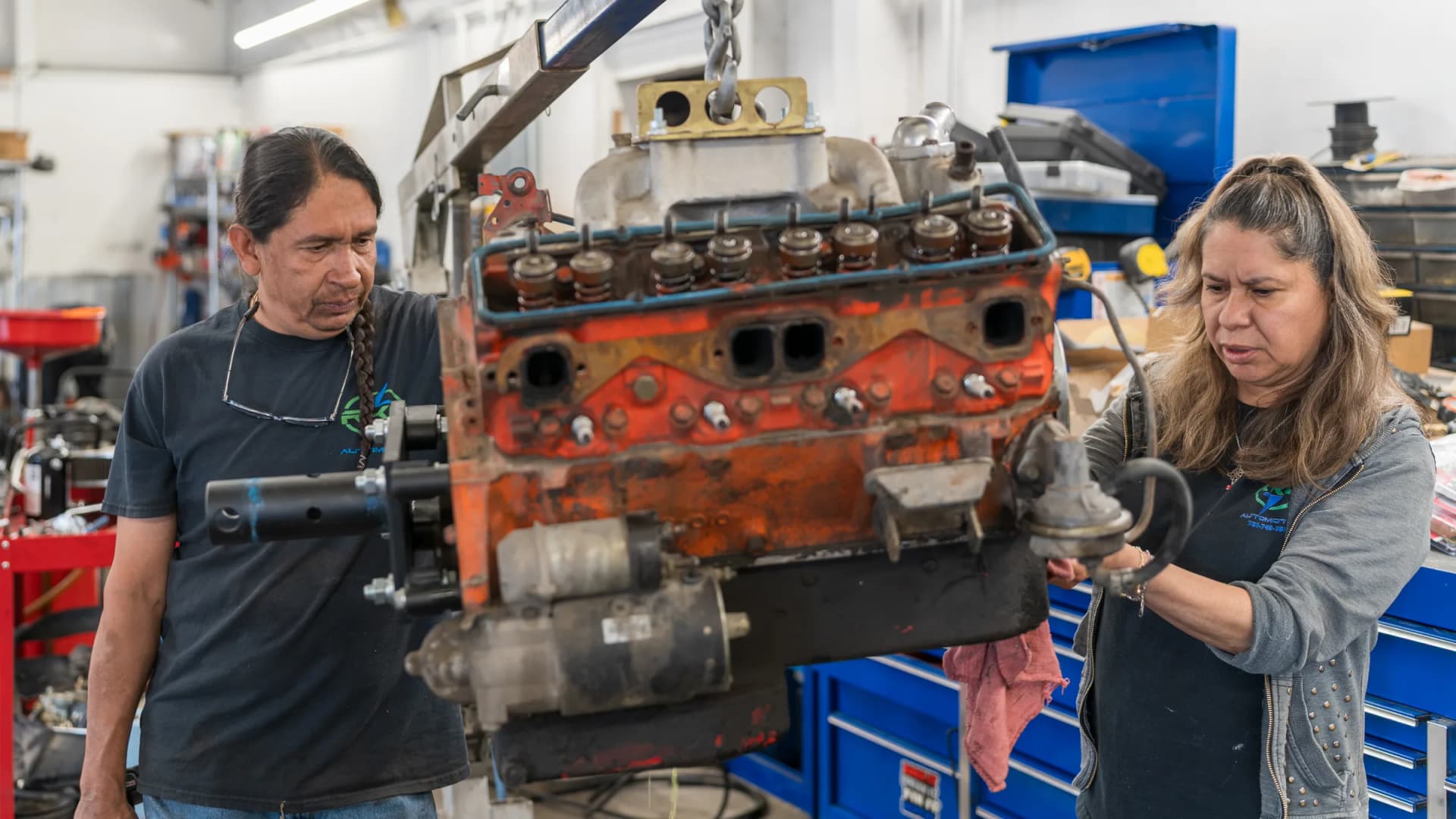
ASE-certified technicians rebuilding an engine at RKC Automotive in Englewood, CO

Machine shop · Englewood, CO

Precision Engine Rebuilding & Remanufacturing in Englewood, CO

Rod knock, low oil pressure, or blow-by past the rings? We pull, strip, machine, blueprint, and rebuild domestic and import engines down to the bare block — with a written estimate and your approval before the first bolt comes off our Evans Ave bay.

$120/hr

posted labor rate

ASE

certified techs

Written

estimates first

Evans Ave

Englewood shop

Reality check

“A tired block doesn't get better with another bottle of additive.”

High-mileage commuters, skipped oil changes, and overheating events open bearing clearances and destroy ring seal. Colorado towing on I-25 and mountain grades accelerates wear on domestic V8s and turbo imports alike. When compression is uneven and oil consumption climbs, the block needs to come apart — measured, machined, and rebuilt to spec. Not every tick or misfire needs a full rebuild — start with engine diagnostics in Englewood or camshaft and lifter repair when valvetrain wear is the root cause. Third-party extended warranty claims for powertrain work are handled in-house at our posted $120/hr rate. RKC has rebuilt engines for Englewood, Denver, Littleton, and south-metro drivers who needed the job done once, not twice.

Warning signs

Symptoms of a tired block

An engine past its useful life rarely fails all at once. Warning signs accumulate quietly — until a drive home from the mountains turns into an expensive tow. These three failure modes mean internal wear, not a quick external fix.

Blow-by past the rings

Compression gases slip past worn piston rings and pressurize the crankcase. You notice oil weeping from seals, a oily residue around the PCV breather, and blue-gray smoke under load — especially climbing I-70 toward the Eisenhower Tunnel with a loaded trailer. Blow-by is not a seal problem; it is ring-to-wall clearance that has opened beyond spec. Additives cannot restore the bore finish or ring tension your block needs.
Low oil pressure at hot idle

A healthy engine holds oil pressure once warm — typically 20 psi or more at hot idle depending on the spec sheet. When main and rod bearing clearances wear past tolerance, oil escapes faster than the pump can maintain volume. The gauge drops when you stop at a light in Englewood summer traffic, then recovers slightly off idle. That pattern traces to bearing wear inside the block, not a faulty sender. Thicker oil masks the symptom briefly; it does not fix the clearance.

Rod knock — spun bearings

Rod knock is the unmistakable hammering from the oil pan — a rhythmic metallic beat that rises with RPM. It means a rod bearing has spun, wiped, or begun transferring material to the crank journal. This is not a lifter tick and not a exhaust leak. Every mile driven after rod knock starts risks trashing the crank, block bore, and rod itself. Tow the vehicle. Do not limp home hoping the noise fades.

Stop driving immediately — rod knock destroys cranks fast.

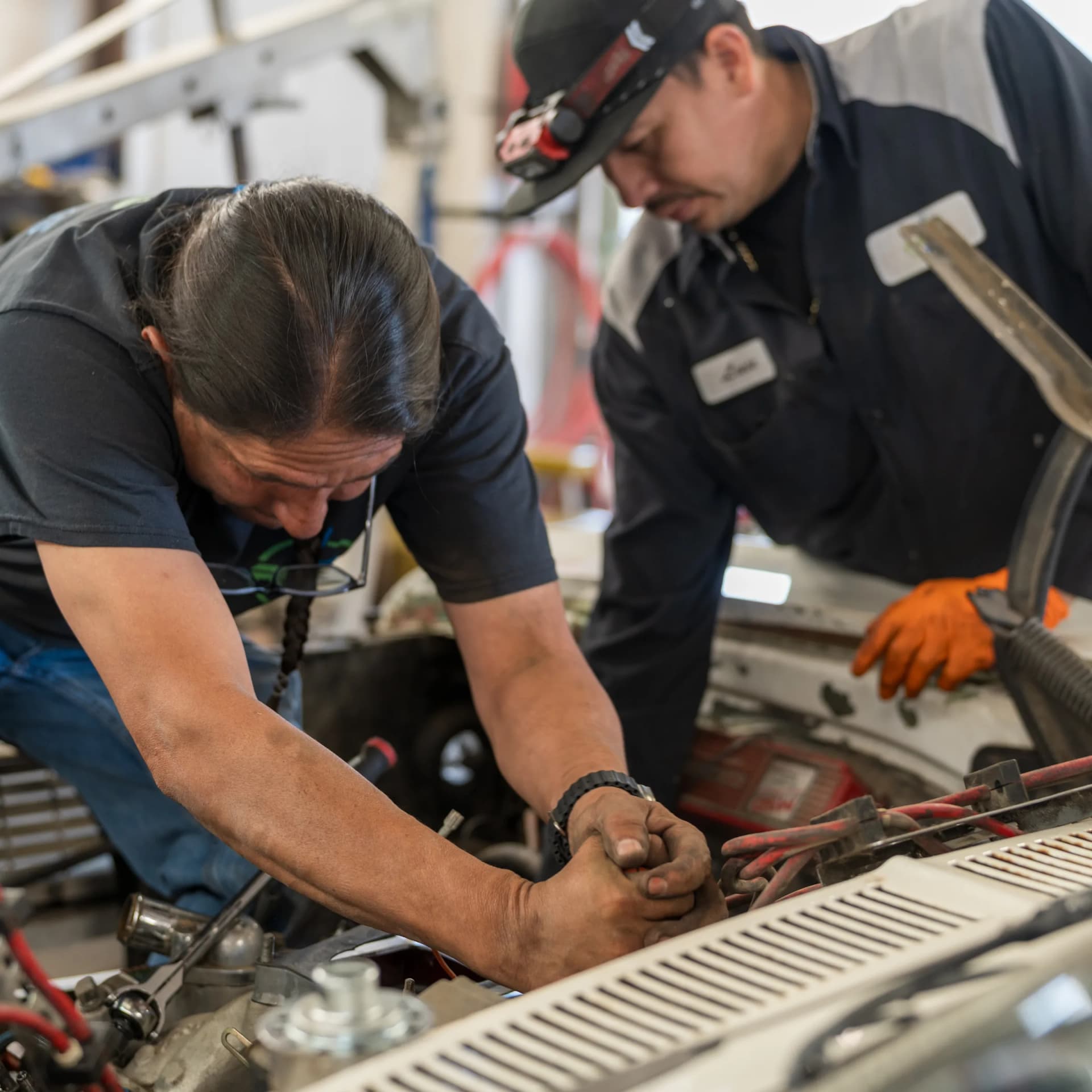
Engine bay service and machine shop work at RKC Automotive Englewood CO

Machine shop

Blueprinting from bare casting to balanced assembly

A proper rebuild is not bolt-on parts — it is a documented machine-shop workflow. Every step below gets measured, photographed when findings change scope, and signed off before reassembly begins.

01

Strip to bare casting

The engine comes off the vehicle and onto a stand. Every fastener, plug, and accessory is cataloged. We separate the short block from heads, oil pan, and front cover so each component can be measured independently. Colorado winters and deferred coolant service often leave scale in water jackets — stripping clean is the only way to inspect what the block actually looks like inside.

02

Hot tank & degrease

Castings go through hot tank cleaning to remove sludge, carbon, and rust scale from oil galleries and coolant passages. Sludge alone does not cause failure, but it hides cracks and prevents accurate magnaflux results. Clean metal reveals the casting's true condition before we commit to bore and hone work — and before you approve machine-shop charges on a block that might not be salvageable.

03

Magnaflux crack inspection

Magnaflux applies magnetic particle inspection to ferrous castings, revealing hairline cracks around cylinder bores, main webbing, and bellhousing bolt bosses. A crack that looks like a stain on a dirty block becomes obvious under UV light after magnaflux. Finding a crack here saves you from assembling a fresh rotating kit into a block that will fail again — we document findings with photos before scope changes.

04

Bore & hone with torque plates

Cylinders are bored to oversize only when wear or scoring demands it, then honed to the final finish with torque plates installed. Torque plates simulate head-bolt clamping load so the bore roundness you measure on the hone matches what the engine sees at running temperature. Skipping torque plates is how shops end up with oval bores and broken ring seal after a few thousand miles.

05

Deck surface resurfacing

The block deck and cylinder head mating surfaces are measured for flatness and resurfaced when out of spec. MLS head gaskets — common on modern domestic and import engines — tolerate almost zero imperfection. A warped deck from overheating or head-bolt stretch causes combustion seal failure and coolant intrusion. We surface to the minimum spec, not the maximum cut, to preserve compression height.

06

Dynamic balance assembly

Crankshafts are mic'd, polished, or ground to undersize as needed. Rod and piston assemblies are weighed and matched; the rotating assembly is dynamically balanced so vibration does not hammer bearings at highway speed. Balance work is what separates a rebuilt engine that feels new from one that buzzes through the steering wheel on C-470. Every measurement goes on the build sheet you receive at pickup.

Parts & assembly

The component checklist

Reassembly is only as good as the parts going in. We match pistons to bore size, file-fit rings to each cylinder, and size bearings to measured clearances — not shelf guesses. Trusted names like Clevite and King beat generic kits when your engine has already proven it can destroy inferior components.

Pistons & rings

  • Hypereutectic or forged pistons sized to final bore measurement
  • File-fit moly or ductile iron rings per bore with end gap checked
  • Pin bore and ring land inspection before assembly

Bearings & rotating assembly

  • Clevite or King rod and main bearings sized to measured clearances
  • Crank journal polish or grind to next undersize when scored
  • Rod reconditioning or replacement when big-end ovality is out of spec

Lubrication & timing

  • High-volume or OEM-spec oil pump matched to engine family
  • Timing chain or belt kit with guides and tensioners
  • Cam bearings, freeze plugs, and galley plug replacement

Sealing & hardware

  • Full gasket set — MLS head gaskets when spec requires
  • Rear main seal, front cover seal, and valve cover gaskets
  • ARP or OEM-critical fasteners torqued to sequence spec

Scope options

Short-block vs. long-block

Not every failure requires the same depth of work. We quote both paths when inspection supports it — so you choose based on head condition, budget, and how long you plan to keep the vehicle.

Short-block

Everything below the cylinder heads — ideal when heads pass leak-down and surface flatness checks but the bottom end is worn. You reuse or separately rebuild heads while the block, crank, and rotating assembly are restored to spec.

  • Bare block — bored, honed, deck surfaced, magnaflux passed
  • Crankshaft — inspected, polished or ground, dynamically balanced
  • Connecting rods — reconditioned or new matched set
  • Pistons & file-fit rings — sized to measured bore
  • Rod & main bearings — clearance matched to journal size
  • Oil pump, timing set, cam bearings (if applicable)
  • Rear main seal, freeze plugs, core plugs

Long-block

Turnkey rotating assembly plus reconditioned heads and valvetrain — the right call when heads are warped, cracked, or have valve-seat damage from overheating. One assembly, one warranty scope, less coordination for you.

  • Everything in a short-block rebuild
  • Cylinder heads — resurfaced, valve job or seat work as needed
  • Valves, springs, retainers, and stem seals
  • Rocker arms, pushrods, or OHC cam hardware (engine dependent)
  • Intake manifold gaskets and critical vacuum sealing surfaces
  • Multi-point assembly inspection before installation
  • Break-in oil and initial start with oil pressure verification

$120/hr

Labor transparency on every rebuild

Major engine work is a significant investment. We bill at our posted $120/hr rate using AllData and Mitchell book times as a baseline — but every rebuild starts with a written estimate before teardown. If magnaflux reveals a crack, journals are scored beyond grind limits, or head damage changes scope, we call with photos. Nothing moves forward without your approval.

Written estimates

Scope, labor hours, and parts allowance documented before the first bolt turns.

Book-time baseline

AllData and Mitchell guides — not inflated hours padded into the quote.

Approval before teardown

Photos and phone call if inspection findings change the rebuild plan.

FAQ

Engine rebuild questions

Straight answers on short-block vs. long-block scope, timelines, turbo rebuilds, and why machine-shop blueprinting beats a junkyard swap.

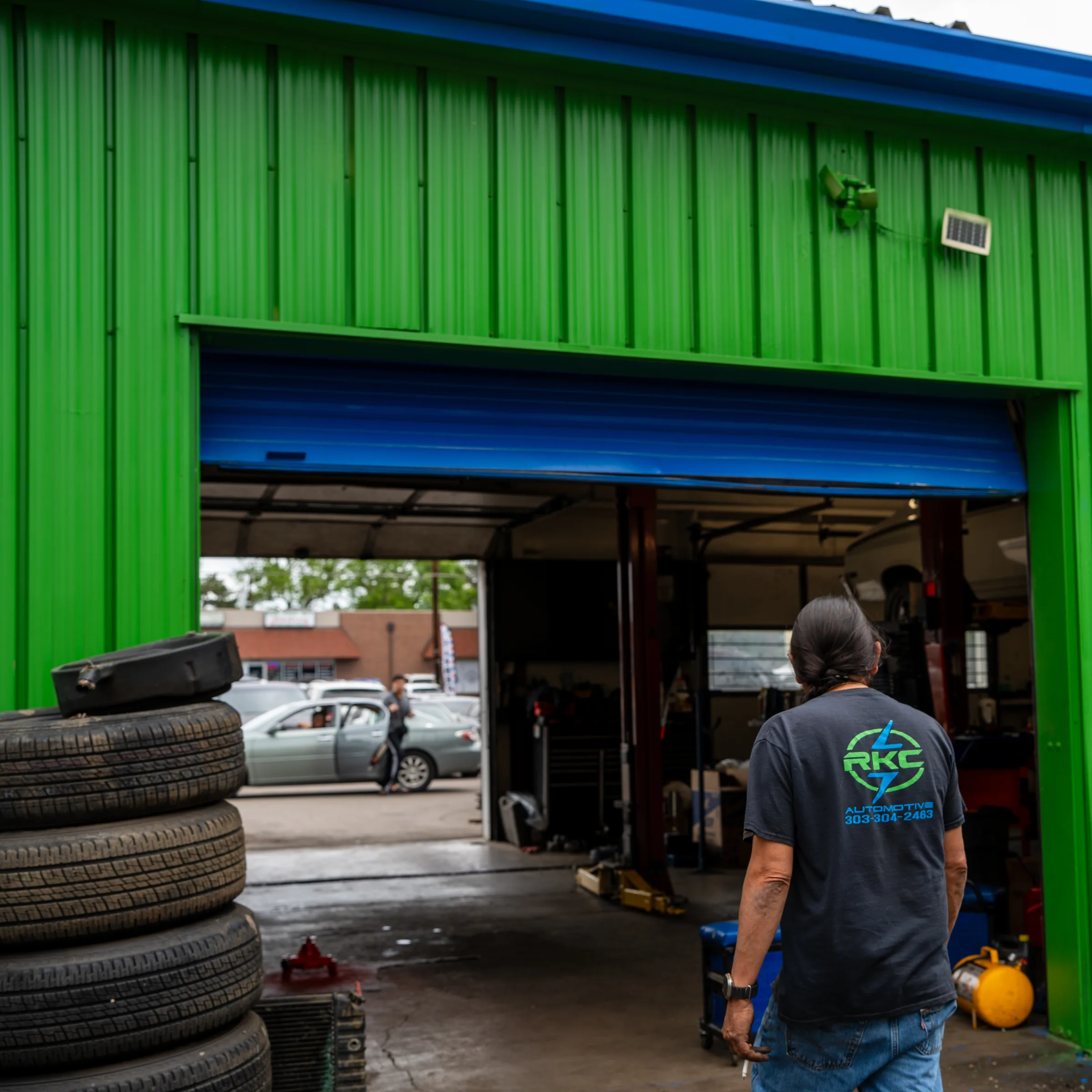
RKC Automotive shop bay in Englewood Colorado — engine rebuild service

Evans Ave · Englewood

Ready for a rebuild estimate?

Book a consultation at 2120 W Evans Ave, Englewood, CO 80110. We review symptoms, discuss short-block vs. long-block options, and provide a written estimate at $120/hr labor plus parts — before teardown begins.

2120 W Evans Ave, Englewood, CO 80110Get directions